.png)
The Complete Guide to Selling Gold Jewelry for Cash
- Chattanooga Gold & Silver

- 1 day ago
- 6 min read
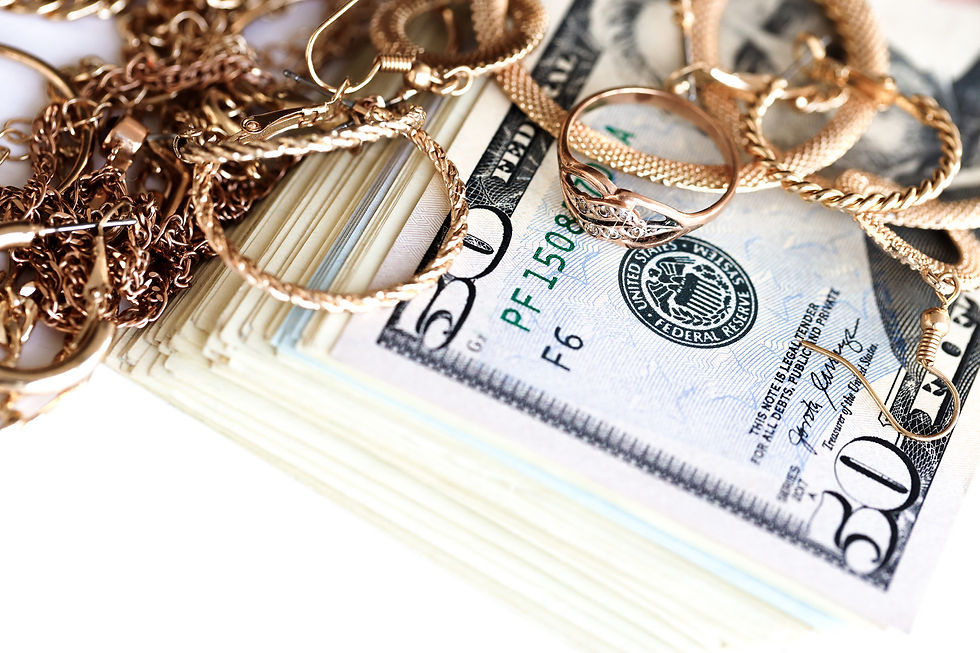
Most people who want to sell gold jewelry share the same quiet worry: they have no idea whether the number on the table is fair or whether they're about to leave money behind. The market gives you plenty of options: pawn shops, online mail-in buyers, and local dealers, but those options are not equal. The payout gaps between them can be significant, and walking in without a baseline puts you at a clear disadvantage.
This guide gives you a practical framework for selling gold jewelry with confidence. You'll learn how to calculate what your gold is actually worth before you go anywhere, how to prepare your pieces, what honest evaluation looks like, and how different buyer types compare on payout. Use this as your benchmark before you walk through any buyer's door.
How to Sell Gold Jewelry: What Your Gold Is Actually Worth
Gold jewelry is priced on two variables: karat purity and weight. Karat tells you how much of the piece is actually gold. A 10K piece is 41.7% pure gold. A 14K piece is 58.3%. An 18K piece is 75%. And 24K is essentially pure gold at 99.9%. You'll find the karat stamp inside a ring band, near a necklace clasp, or on an earring post. Higher karat means more gold content per gram, which directly raises the offer you should receive.
Once you know the karat, you can calculate melt value at home using one straightforward formula: weight in grams, multiplied by the current gold spot price per gram, multiplied by the purity fraction. For example, with gold trading around $135 per gram, a 10-gram 14K piece works out to roughly $787 in raw gold content (10g × $135 × 0.583 = $787.05). That number is your floor, and your starting point for any negotiation. Depending on the buyer type, realistic offers typically range from about 40% to 95% of that melt value, the buyer comparison section below explains why the range is so wide. Knowing your melt value before you walk in changes the conversation entirely.
When you're ready to sell gold jewelry, you can use a gold melt value calculator online to verify your figures using that day's live spot price. Bookmark one before your appointment so you're working from current numbers, not yesterday's market.
How to Prepare Your Pieces for the Best Possible Offer
Separate your pieces by karat if you can identify the stamps. Dealers test every piece individually regardless, but arriving organized signals that you're an informed seller, not someone in a rush to accept whatever number comes first. A light wipe-down is fine, but don't aggressively clean or alter pieces before the appointment. Aggressive cleaning can obscure hallmarks or prompt questions about altered surfaces.
Bring any original receipts, appraisals, or certificates you have, especially for designer or estate pieces. They rarely change the metal payout calculation, but they help a buyer recognize resale value that goes beyond raw melt. Before you go, note the visible hallmarks on each piece. Knowing your stamps in advance speeds up the evaluation and signals that you've done your homework.
What Happens When a Reputable Gold Buyer Evaluates Your Pieces
A trustworthy buyer follows a clear testing sequence. The process starts with a visual inspection of hallmarks, then moves through a series of increasingly precise tests.
Magnet Test
Real gold is non-magnetic. A magnet test quickly flags plated or base-metal pieces before anything else happens.
Acid Test
Acid testing on a scratch pad confirms karat range by comparing the reaction against known reference samples. It's fast and reliable for most standard pieces.
XRF Analysis
The most precise non-destructive method available in most dealer settings is XRF, or X-ray fluorescence, which reads elemental composition without damaging the piece. XRF is the industry benchmark for high-value transactions at reputable dealers. For definitive laboratory assays, destructive methods like fire assay are more analytically precise, but those are rarely needed outside of large commercial refining operations.
Every piece should be tested and weighed in front of you. A buyer who skips steps, refuses to explain their process, or presents a number without showing the math is a red flag. The offer should equal melt value minus the buyer's working margin for refining, overhead, and profit. A reputable dealer will walk you through exactly that math before any offer is finalized.
At Chattanooga Gold & Silver, the evaluation process uses live spot market pricing and on-the-spot testing, with the calculation explained openly before any offer is made. That kind of transparency is what you should expect from any buyer you work with.
Where to Sell Gold Jewelry and What Each Option Realistically Pays
Not all buyers operate on the same model, and the payout differences are real:
Pawn shops typically pay 40, 60% of melt value, though ranges vary by location, item type, and shop practices. They're fast and local, but payouts are consistently among the lowest of any buyer type and negotiation leverage is thin.
Online cash-for-gold servicesfrom established companies can reach 75, 95% of melt value, but you ship your jewelry and wait days for payment. That works for high-volume scrap, but it's a riskier route for sentimental or higher-value pieces.
Local precious metals dealers typically land between 70, 85% of melt value, with the most competitive dealers sitting at the higher end, and you walk out with cash the same day.
Payout percentage alone doesn't tell the full story. An online buyer offering 90% of melt value is not the better choice in practice if the piece gets lost in transit or payment takes two weeks. When you sell gold jewelry locally through a long-established dealer, you can ask questions, push back on an offer, and leave with cash in hand. That combination of speed, security, and face-to-face negotiation is a genuine advantage worth weighing against a slightly higher percentage quoted by gold buyers online.
Putting It All Together Before Your Next Visit
The sellers who walk out with the best offers are the ones who walked in prepared. Calculate your gold appraisal value before any appointment using that day's live spot price. Organize your pieces, note your hallmarks, and bring any supporting documentation you have. Then choose a buyer whose process is transparent: testing done in front of you, live pricing, and a clear explanation of how the number was reached.
If you're looking to sell gold jewelry in the Chattanooga area or anywhere across East Tennessee and North Georgia, Chattanooga Gold & Silver provides free, no-pressure valuations using live spot market pricing, with on-the-spot testing, transparent weighing, and same-day cash payouts. Stop in to find out what your pieces are worth, you'll have a clear number in hand before you commit to anything.
Frequently Asked Questions
How do I find out how much my gold jewelry is worth before selling?
Use the melt value formula: weight in grams × current gold spot price per gram × purity fraction (e.g., 0.583 for 14K). A gold melt value calculator can do this in seconds using live pricing. That figure is your baseline before walking into any buyer.
Where can I sell gold jewelry near me for the best price?
Local precious metals dealers typically offer the best combination of competitive payout (70, 85% of melt value), same-day cash, and in-person transparency. Search for established gold buyers in your area, read reviews, and ask upfront how they calculate offers.
What is a fair payout percentage when I sell gold jewelry?
It depends on the buyer type. Pawn shops generally offer 40, 60% of melt value. Online gold buyers can reach 75, 95% but involve shipping risk and delayed payment. Reputable local dealers typically pay 70, 85%, with same-day cash and a transparent calculation.
Do I need an appraisal before selling gold jewelry?
A formal appraisal isn't required. Most reputable buyers test and weigh pieces on-site at no charge. However, appraisals or original receipts are useful for designer or estate pieces where resale value may exceed raw melt value.
What tests should a gold buyer perform before making an offer?
At minimum: a visual hallmark inspection, a magnet test, and an acid test. High-quality buyers also use XRF (X-ray fluorescence) for non-destructive elemental analysis. Every test should happen in front of you, and the buyer should explain each step.
Is it safe to use an online gold buyer?
Established online gold buyers can be legitimate, but the process carries real risk, pieces can be lost in transit, payment can take days, and negotiation isn't possible. For valuable or sentimental pieces, a local buyer is generally the safer and more practical choice.


Comments